

Blog
VRF Air Conditioning Systems Maintenance

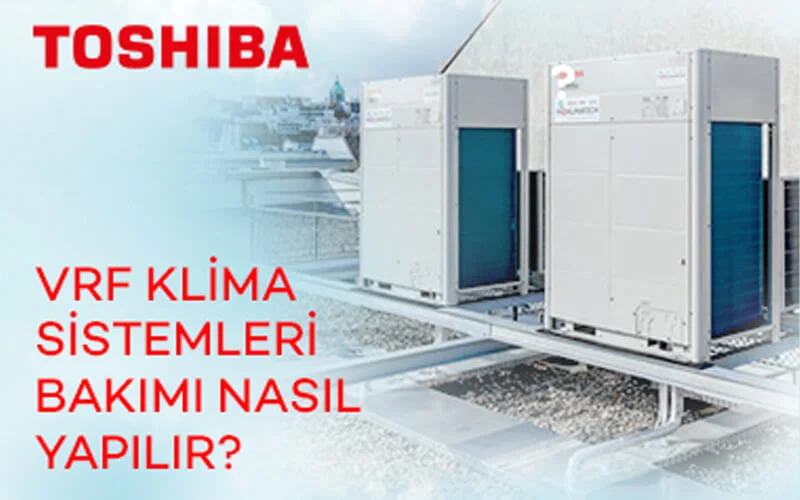
VRF air conditioning systems are versatile units that provide comfort in both homes and offices and can be used year-round. As with any air conditioning model, maintenance and cleaning of VRF air conditioning systems are extremely important. Let’s take a look at how to maintain a VRF air conditioning system—which both extends the unit’s lifespan and ensures better performance—and what you should keep in mind.
Why Is VRF Air Conditioning System Maintenance Important?

Maintenance of a VRF air conditioning system is extremely important for the health of both the unit and the consumers using it. Invisible dust and particles in the area where the air conditioner is used pass through the VRF system’s filters and, over time, can accumulate on the indoor unit, forming a resin-like substance. If these residues and buildup remain on the filters for too long, they can lead to bacterial growth and even make people in the room sick. It is very important to perform periodic maintenance on VRF air conditioning systems, as neglecting this can not only affect user health but also lead to a decline in the unit’s performance and, ultimately, cause it to break down. From a hygiene perspective, to ensure your VRF air conditioning system has a longer lifespan, it must be serviced regularly by authorized service providers and experts in the field. By having your VRF air conditioning system serviced at least twice a year, you can take significant precautions to protect your own health and that of your loved ones, while also extending the system’s lifespan and improving its performance. In addition, having your VRF air conditioning system serviced at regular intervals is crucial to prevent increased energy consumption, the emission of unpleasant odors, costly breakdowns in the short term, and water leaks resulting from clogs in the drainage system. Now, let’s learn together how to clean a VRF air conditioning system, separately for the indoor and outdoor units.
VRF Air Conditioning System Maintenance: How to Maintain the Outdoor Unit?
Maintenance of a VRF air conditioning system begins with the outdoor unit. After general cleaning, the process moves on to detailed maintenance and cleaning steps. This is followed by cleaning the unit’s coils, checking for gas leaks inside the unit and repairing any leaks, and cleaning the interior of the outdoor unit. When it comes to technical procedures, the maintenance tasks that must be performed exclusively by an authorized service provider are as follows: Inspection of electrical power connections and communication cables; inspection of mechanical connections in the fans; verification of relevant connections on electronic circuit boards; inspection of the expansion valve’s electrical connection; confirmation that sensors are functioning properly; and inspection of electrical connections. It is important to remember that inspecting electrical and cable connections is crucial during VRF air conditioning system maintenance; after all, any electrical malfunction that may occur could affect other properly functioning systems and cause unpredictable damage to the unit.
VRF Air Conditioning System Maintenance: How to Maintain the Indoor Unit?
Air conditioning maintenance teams proceed to clean the indoor unit after cleaning the outdoor unit as part of VRF air conditioning system maintenance. To ensure your VRF air conditioning system operates efficiently and provides healthy airflow, the indoor unit must be cleaned with at least as much care and attention as the outdoor unit. After the initial general inspection, the exterior of the indoor unit is cleaned; protective covers are opened for inspection and cleaning. Sensors, which are critical to the proper operation of the VRF air conditioning system, are also inspected to ensure they are functioning as intended. Indoor unit maintenance includes cleaning the coil, checking for refrigerant leaks, and performing a general interior cleaning. The compressor, mechanical connections of the fans, communication cables, and valves are also among the components inspected during this cleaning and maintenance process. During indoor unit maintenance of the VRF air conditioning system, the connections and functions of safety components are also monitored by connecting the system to a computer via the service software, and any issues are resolved. After all these checks and maintenance tasks are completed, your authorized service provider will run a performance test on the VRF air conditioning system to ensure that there are no issues.
You can explore Toshiba’s high-quality, state-of-the-art VRF air conditioning models in the VRF Systems category.